"Professor" Jiang is a Beijing plot to mess with your mind
An Influencer Beijing Shouldn't Allow to Exist — But Does
A Beijing resident runs a YouTube channel on a platform his own government bans.
"Professor" Jiang runs a YouTube channel out of Beijing. It went viral in May 2024 with a classroom video with three predictions: i) Trump's return, ii) an Iran escalation, iii) a coming geopolitical realignment. No one noticed until it resurfaced in June 2025, and it spiked to 800,000 views. August saw it climb to 4 million. Today it sports 4.3 million views.
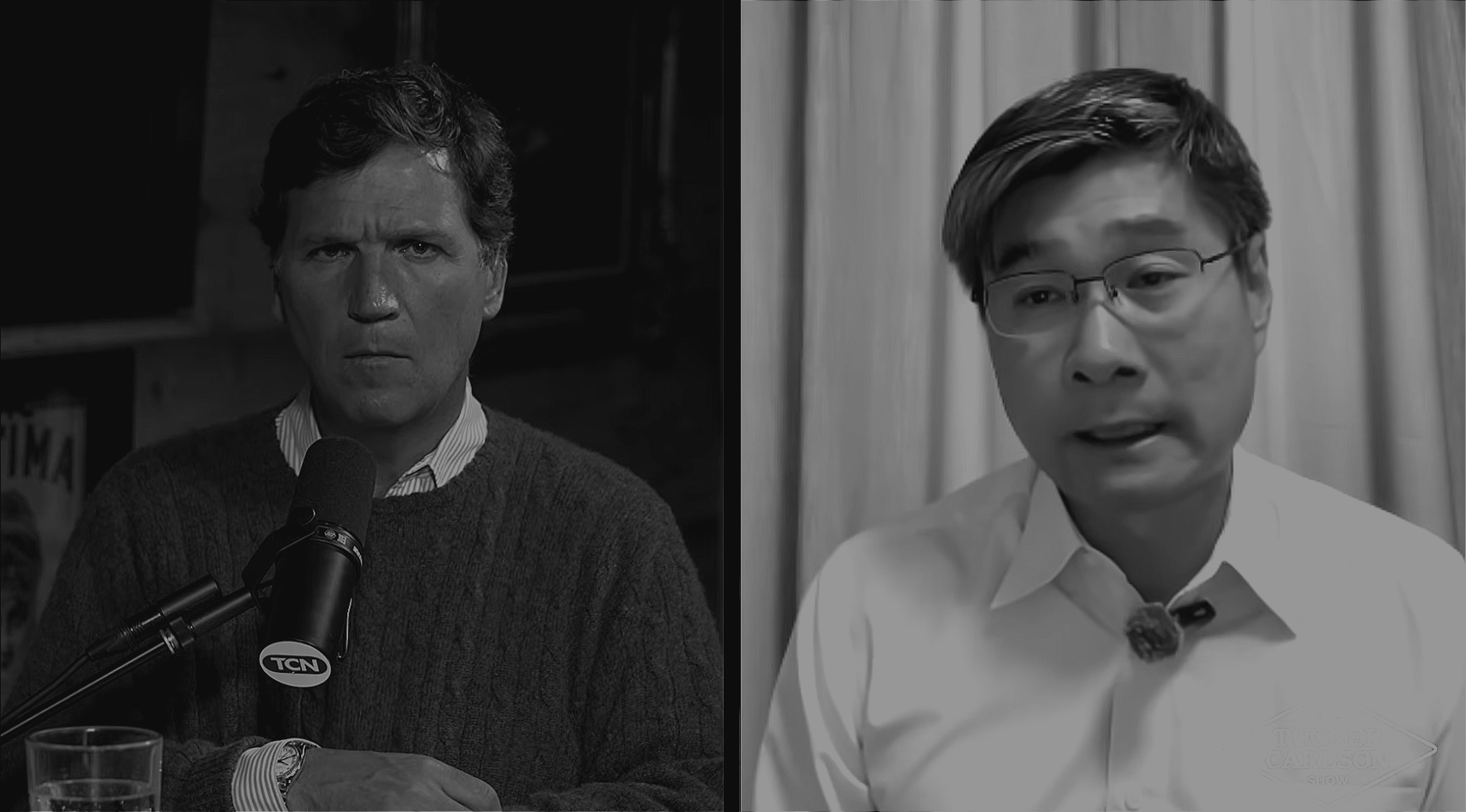
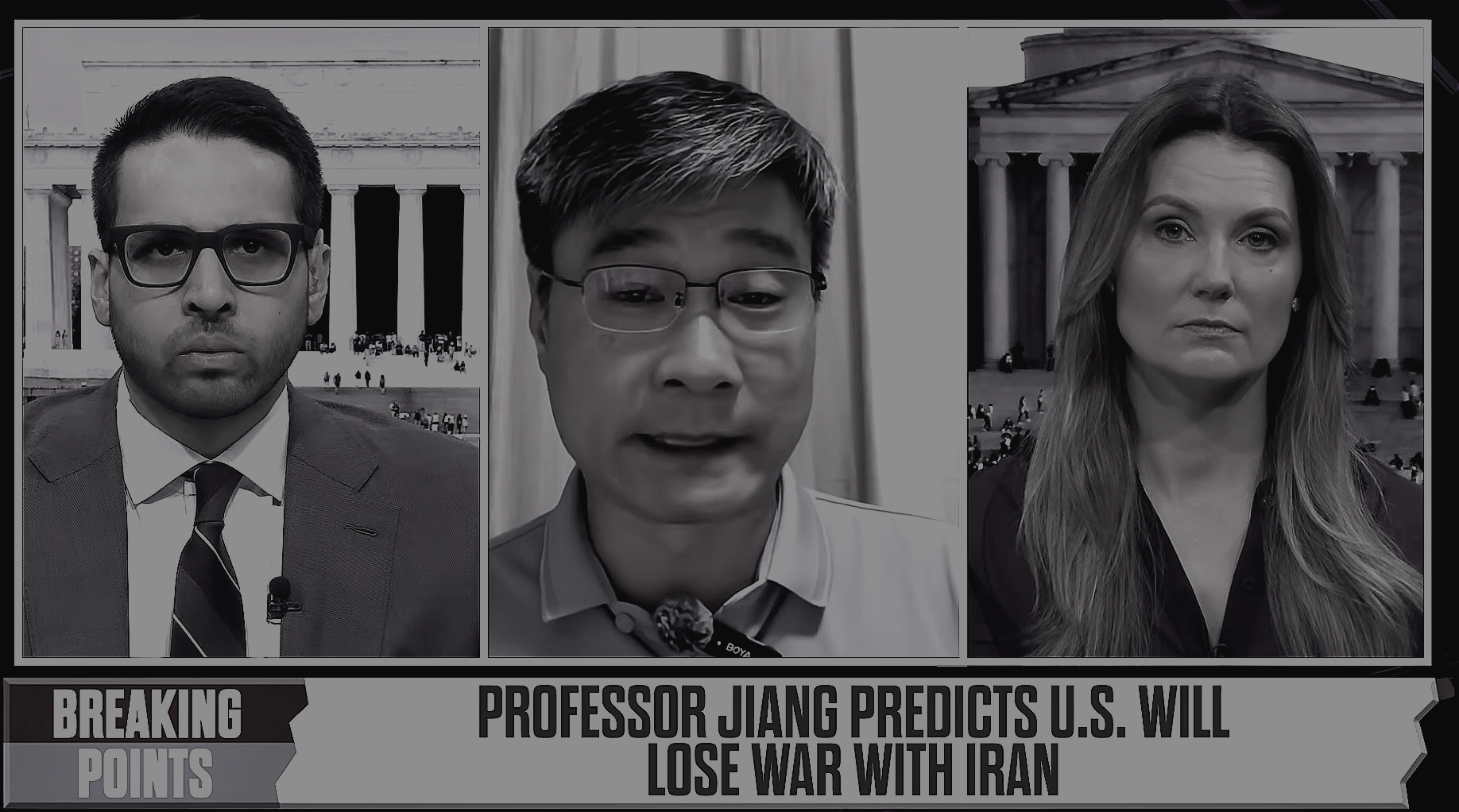
Interviewed by Breaking Points and Tucker Carlson, two of the most-watched political programs in America. His numbers have become mainstream.
Breaking Points: 8.9 million views on a channel with 2 million subscribers. Tucker Carlson: another 3.2 million. Beijing's humble high school teacher earned over 12 million views across the two anti-establishment media programs in America. Since those two appearances, his channel pulls over a million views on some days, 27 million in the last 30 days, and 72 million total.
Beijing's dissident high school teacher now reaches more Americans per month than most cable news programs. Mr. Rogers would covet these numbers. You better believe young people are in his target demographic; his act is as a high school teacher.
Neither asked the obvious question: how can a Beijing-based influencer post on YouTube, a platform China bans in a country where disobedience can mean disappearance?
Think about that. A Beijing resident runs a YouTube channel on a platform his own government blocks. Unauthorized VPN use in China can carry fines up to ¥50,000. The state reads WeChat messages and sweeps discussion groups for dissent. A teacher operating in the open, for years, without the lights going out is not a loophole. It's a hall pass.
The question is the introduction to the mystery.
Jiang on Tucker CarlsonJiang on Breaking Points
Tucker Carlson and Breaking Points Handed Beijing a Megaphone
Jiang is mainstream, just not from the angle you're looking at.
60 Minutes averages 8.45 million viewers per episode in the 2024-25 season. In the current 2025-26 season, it's pulling around 10.3 million on strong weeks. From a single YouTube interview, Jiang matched the most-watched news program in America. Both interviews stacked are worth almost two 60 Minutes episodes. With a different, younger, and diverse audience.
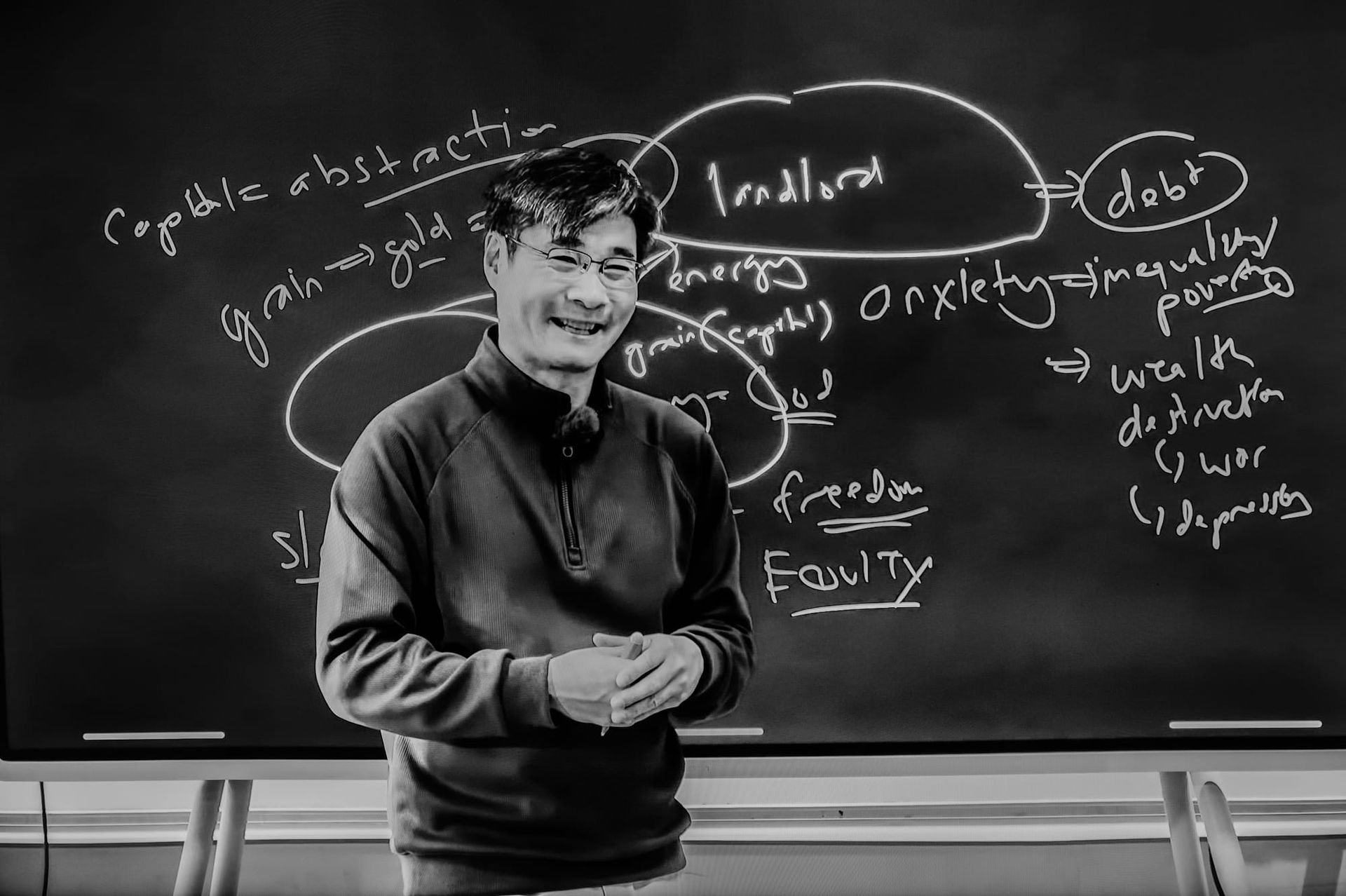
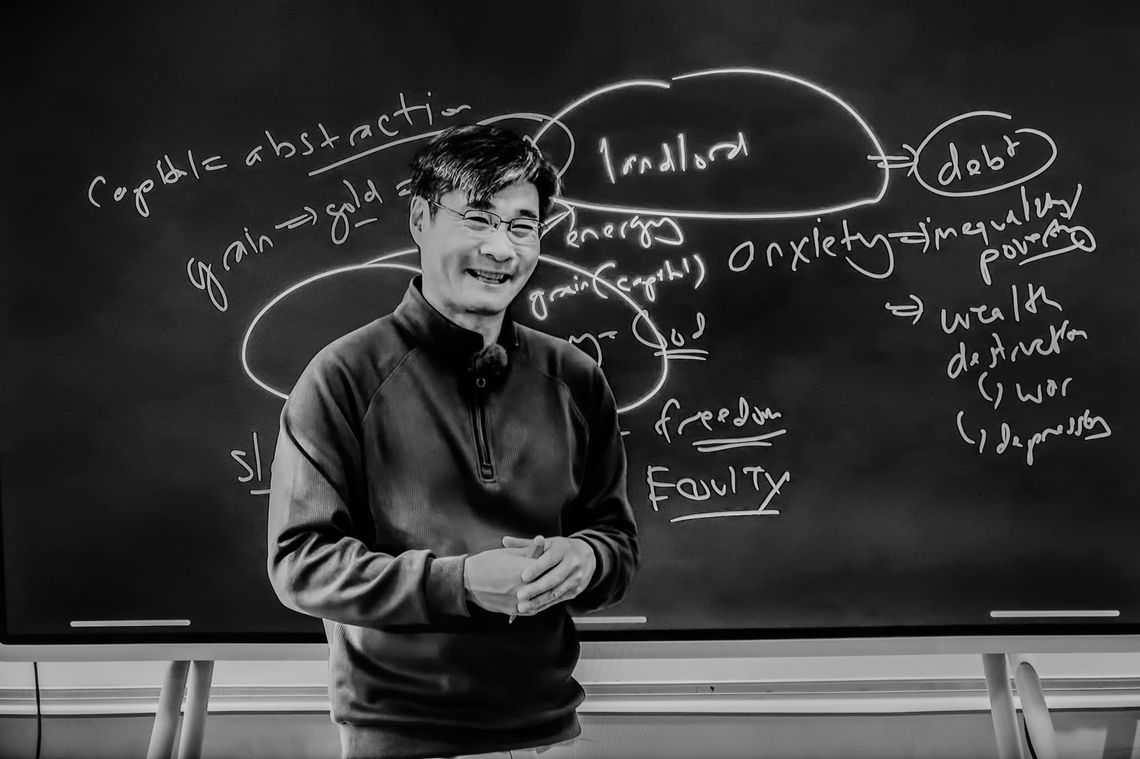
For over a year, I've watched Jiang produce lecture-style videos. He started with a low-resolution laptop camera. Now he shoots in 4K with a smart board. He covers international relations, philosophy, deep human history. Each lecture reinforces the last. Together, they tell a story.
A private high school teacher in Beijing does not self-fund a 4K broadcast studio. He does not pay for the smart board, the lighting, the edit suite, the hours. You don't need to see receipts to observe pattern.
He is charismatic. He presents himself as a self-styled prophet whose lectures come to him through communion with what he describes as the ultimate consciousness, the gnostic monad. He has sharp spiritual observations that abate religious pretext. Mao's famous line, "religion is poison," is felt in each lecture, but never heard. His lectures have an air of authority, sincerity, and secret revelations. He's precise, animated, oddly compelling. You find yourself nodding at parts, open to his perspective in others. I can't help but like this guy. That's the problem.
Unoriginal
The themes feel recurrent to anyone paying attention. Simple research confirms his insights aren't as original as they're delivered.
Despite his unique personality and effective animated lectures, his conspiracies and theories boil down to familiar tropes. Some of his ideas stem from Mark Booth's The Secret History of the World. This book's content, "as laid down by the secret societies," forms the backbone of the Professor's great conspiracy. Jiang considers Dante an important milestone in literature. Mark Booth, under the pen name Jonathan Black, The Secret History of Dante: Unearthing the Mysteries of the Inferno, would appear to serve as the core source material. A list of books aligned with the many lectures can be found here.
A Philosophy Knot
In a time when philosophy is unpopular, audiences are out of practice, and Jiang's arguments present explanations to mysteries. We all desire mysteries and secrets.
We live in uncertain times and a moment of philosophical hunger. Institutions and experts are discredited and distrusted. Pew found in 2023 that 4% of Americans say the political system is working. Four percent out of one-hundred. The cultural emotion across class and politics is that the systems are rigged by an unseen force you can't beat. Jiang's videos quench a thirst, unaware it's salt water.
In a vacuum, any coherent worldview wins by default — even a poisoned one. It was easy to predict Jiang's success - people are desperate to believe there's an unfair, orchestrated "system" that is the enemy. It defines contemporary sentiment. No one's immune; the wealthy I've known choose to believe in a similar fantasy, but in some cases want to join its ranks, not thwart it. They share a boogeyman nonetheless.
Jiang is a pied piper to something ancient in you — the need to make the material world legible.
He has a technique: weave uncomfortable truths you already half-suspect, that a part of you wants to believe, and tap into fear; their gravity pulls you down towards something you'd never accept cold. But you can't reach it without submersion.
Lies are the cherry on top of a truthful iceberg.
Domino logic and 'if-thus, then-that' is part of the techniques and goes like this: 1) Jiang predicted Trump, 2) Jiang predicted Iran, 3) Jiang predicted the Rosicrucians will inherit the world, and it is all a conspiracy.
And the predictions that made him famous? They don't survive a second look. His May 29, 2024 video forecast Trump's return when Trump was already the presumptive nominee and polls had the race in a statistical tie — Gallup's economic indicators were pointing Republican before Jiang pressed record. An Iran escalation in May 2024 wasn't prophecy either. Hamas and Hezbollah were already trading fire with Israel, and the Houthis were hitting Red Sea shipping. Call it a prediction if you want. I call it reading the tape.
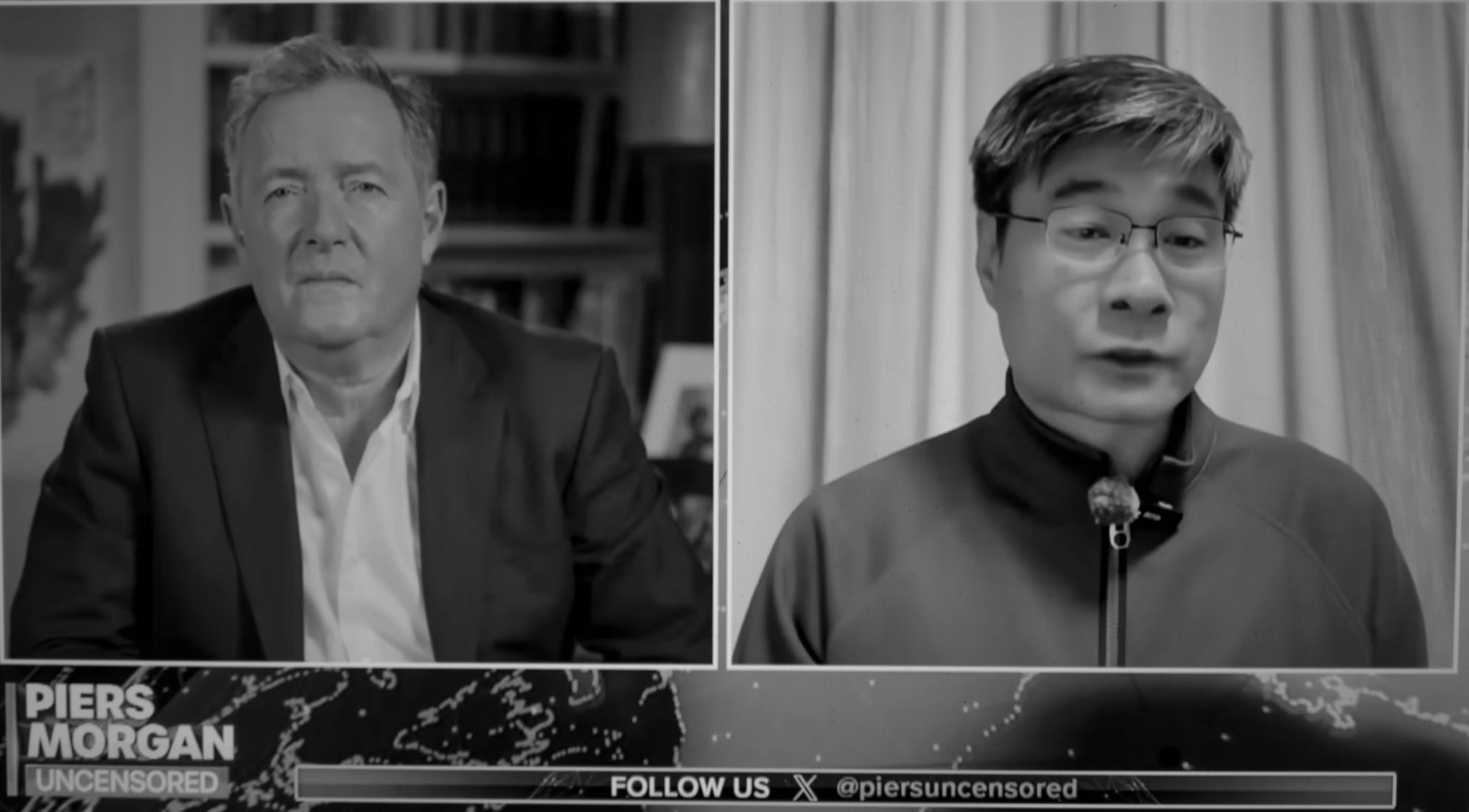
It does not work on everyone, and it failed in real time on Piers Morgan. In that interview, Jiang laid out the logic we've come to know, built his credibility, and revealed the conspiracy. A bit towards one-world government, and that the US military seeks to bring back Jesus Christ through this war. I was taken aback; he doesn't quite focus on this with the same intensity he did in his lectures with Piers. Under pressure because Piers was playing it straight with pushback. Jiang reverted to his cosmic cards. It's just incredible how he articulates this stuff with a certain earnestness where you want to believe him.
Piers was nonreactive and ended the interview in a polite manner an Englishman can that implied You'd lost your credibility with me. Morgan said the word speculation "doesn't do it justice".
Jiang did not make the same mistake on the American shows. He read the room and gave his audience what they wanted. Piers was a useful trial run to set boundaries. Both interviews did not end where Morgan's did. There again most don't. That calibration is not the behavior of a man who shares genuine beliefs. It's the behavior of someone running an operation.
Uncovering Jiang
His full name is Jiang Xueqin. Born in 1976 in Taishan City of Guangdong province, China. He first arrived in North America in Canada at age six. He would attend Yale before a return to China and arrested in 2002 as a participant in the labor protests. After his release, he traveled to the United States to work in education and is now Beijing-based, with unclear affiliations.
This biography is self-reported with some cursory digital sleuth work. Others will investigate to find gaps. If and when there are gaps in his life story, a pre-built answer exists: elites erased the records. It's an unfalsifiable claim that creates a giant sucking sound in an argument. Who cares what his background is - it's about what he has become. Nonetheless, I've reached out to Yale for information.
Jiang is not a "Professor". He has been an educator, and in education as an administrator, based on what can be found. I do not interpret this as fraud. The Italian intelligence officers I knew coined seniors with experience as "Professor". It can be a term of distinction not clinical higher-education vocational term.
What the biography does do is make him relatable to his American audience. He grew up poor, was teased for his raggedy clothes, and his father cut his hair. His dad spent his life as a dishwasher and today, lives on Canadian government pension and clings to life. Jiang overcame it all, got into Yale despite his 'Edward Scissorhands' pop and Boo Radley's wardrobe. You root for someone with that history. Engineered or convenient and useful, the background makes him a more valuable asset.
He looks like someone I saw pricing a garden hose at Home Depot. He presents as relaxed, as though he’s at home. Nothing about him brands him as a foreigner, which is why the British journalist, Piers Morgan, suspected he’d come straight from a TV studio’s green room when he interviewed him.
Jiang's relatability is undeniable. When he talks about how he became obsessed with school in search of cosmic revenge for the poor teased kid he was it resonates. It resonates as fiction and hits hard as his truth. When he tells it, he's sincere and the entire presentation hooks you.
But follow each road his lectures travel, and you arrive at the same location: a new philosophy that is a quiet, persistent, hostile resistance to Western society and America. He does criticize China, but his jabs feel like a sparring match and are incomplete.
He steers clear of Chinese critiques except in a couple of areas: that China is the worst mixture of Communism and Capitalism (hidden argument that they're the same), and America is a better mixture in some ways. Jiang argues the Chinese education system is cruel, is destroying the morale of kids, and is a travesty. He probably believes that, and in that moment, I felt he was off-script, but he's given some leeway as the CCP experiments with this new influencer model from the Wolf Warrior approach to the world. In the past, people who protested the CCP disappeared. He reveals raw glimpses of himself to the viewer, and it hardens the authenticity of his narrative.
China's New Information Strategy
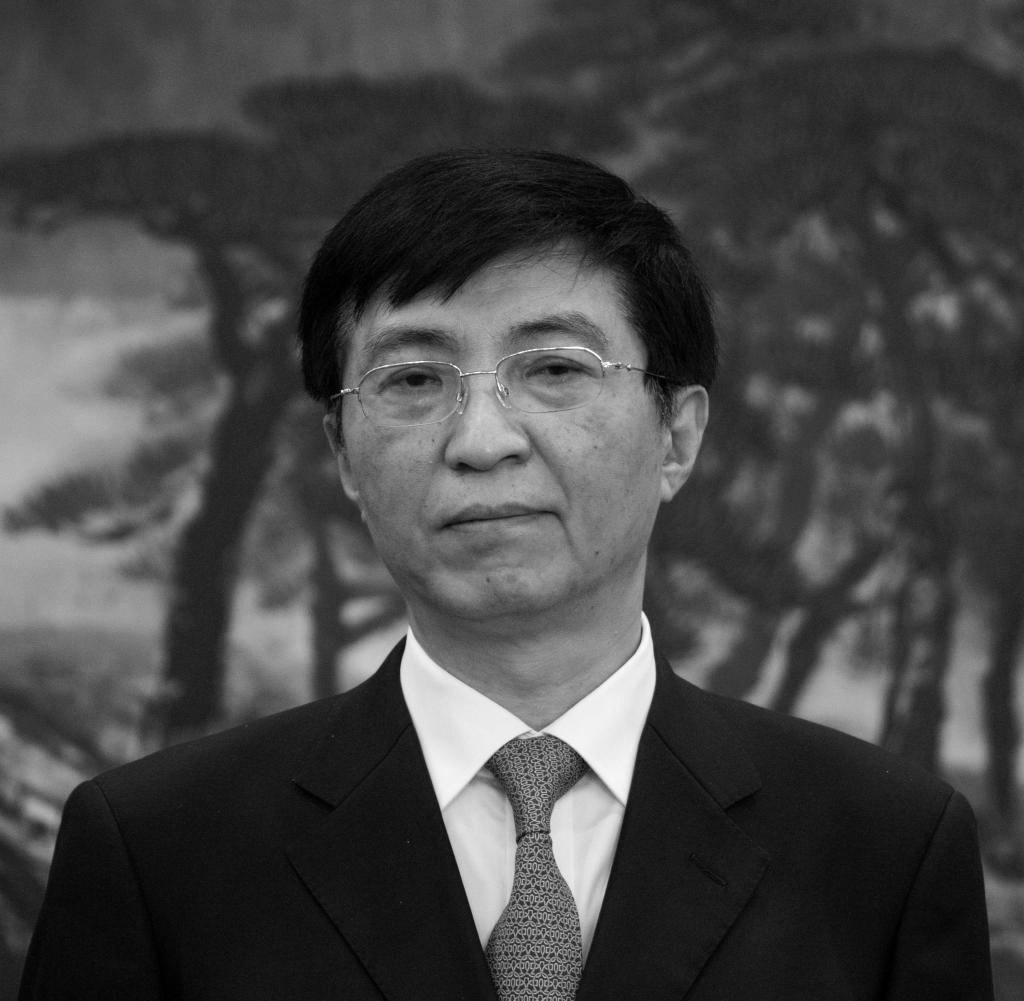
To understand what Jiang is, you must understand Wang Huning.
Wang Huning is the Chinese "Kissinger" — the fourth-ranking member of China's Politburo Standing Committee and the ideological architect behind the CCP's signature doctrines. A former Fudan University political scientist, he has been the intellectual engine behind three consecutive Chinese leaders. He rarely speaks to foreigners and is almost never seen in public.
In 1988, Huning spent six months traveling the United States, cataloguing what he called its fractures. The book he produced, America Against America (downloadable link above), reads like a political scientist's field notes on a civilization quietly undoing itself. His central observation: that the same force driving America's greatness — radical individualism — was also its fatal vulnerability. A nation of individuals cannot resist as a collective.
Huning's book became popular after January 6th. It became semi-prophetic as Jiang has become. Because Wang predicted the dysfunction and self-destructive behavior that January 6 embodied Chinese readers hunted down this book. I am sure Huning's domestic messaging played a role.
The book can be boiled down to a few of his observations. That America is a "contradiction". The atomic element of American society is the individual. His final observation and truth is that America's strength is its flaw: individualism.
It is a sharp thesis. It is also 150 years old.
Alexis de Tocqueville arrived in America in 1831 and left with the same diagnosis. In Democracy in America, he named individualism as democracy's most dangerous internal tendency not tyranny from without, but withdrawal from within. As democratic society matures, he wrote, citizens retreat into private life. They tend their gardens, raise their children. A silent abandon of the habit of acting together. The civic muscles atrophy and public squares empty. A Vacuum, Tocqueville warned, breeds a new kind of subtle despotism not a tyrant, but a system of "small complicated rules" so vast and pervasive that citizens cease to think of themselves as agents at all.
I think of this when someone tells me you "can't" do that. Alerts to an act as "illegal" when it's a safety warning sign that says wrong way. Americans rest on the laurels of an established state and security system. Chaos that raged that's cooled is long forgotten and not even accessible by books and movies because it must be lived. Veterans get a sense of it in other countries but it's in other countries.
Huning Must Have Read Tocqueville For His Visit
The crucial difference between the two men is what they did with the insight. Tocqueville wrote as a friend of democracy — his diagnosis came with a prescription. The antidote to individualism's corrosive pull, he argued, was the voluntary association: America's singular genius for forming civic organizations, movements, and local governments that trained citizens in collective action. America's immune system. Huning's book excises the heart. There is no antidote in America Against America and the omission is not accidental. It's the strategy.
That America is a vector, a diseased pathway on an irreversible course towards self-destruction. What Jiang's lectures sell, at scale and with charisma, is Tocqueville's nightmare with the cure removed. Visions of a system too rigged, too ancient, cosmically entrenched, that civic engagement is naive. The message isn't revolt. Disengage is the operative word to Huning's weapon of apathy.
The power of America and its colorful culture of individualism makes it a challenge to out-compete. Wang implies that's not the task. Instead, "coherence" of civilizations. A civilizational clash where the nation that wins has cohesion in its body politic. Wang seeks to accelerate the present contradictions that run wild in America and fuel them towards "fractures". These are themes present in Jiang's lectures. Jiang is constant in his emphasis on "cohesion" and that through it, no one has to meet, or even talk to be on the same page.
Jiang was arrested in 2002 for participation in protests for the Labor movement in China. We will never know what happened, or if that's true: but he was released to the wild and he chose to travel to the United States to work in education afterwards. His timeline is suspect. Whether or not he is witting or unwitting MSS is irrelevant.
What does a disappearance in China actually look like? Reporters Without Borders laid it out in its 2021 report: solitary confinement under something called "Residential Surveillance at a Designated Location," forced confessions broadcast on state TV, psychological pressure calibrated to break the subject before any trial. That is the system Jiang walked out of. Then he walked to the United States. Then he walked back.
Pattern is what counts here: arrested by a government that makes inconvenient people disappear, released, swims toward the West's most important educational and media institutions, now operating freely on a platform his home country bans. Coincidences are real, but this many deserves at least as much of your attention as the Rosicrucians.
This isn't theory. In April 2023, federal prosecutors in Brooklyn indicted 34 officers of China's Ministry of Public Security for running a social media influence operation out of a Beijing facility code-named the "912 Special Project Working Group." They built thousands of fake American accounts to amplify pro-Beijing content and attack dissidents on U.S. soil. The playbook exists. The budget exists. The staff exists. The only question is who else is on the roster.
He Knew What He Left Behind
In November 2017, Jiang wrote a CNN opinion piece about China's media. It's quite good and showcases his Ivy-league brain. He was Beijing-based, describing himself as "a public educator tasked with helping China adopt Western creativity."
He wrote about his 2002 arrest: Chinese secret police held him for 48 hours, told him he deserved 20 years in prison, then deported him. His explanation for why they let him go? "Their fear of the unfettered response of the American media — the world's free speech defender of last resort."
He wrote: "America's free media is the source of American power and progress; China's state-controlled media is what enables the corruption and tyranny that's decaying the nation's soul."
"China can never be as great as the United States until it frees its citizens to pursue the truth."
Jiang's words resonate don't they? That was 2017, he had returned to Beijing where he wrote the article. He pens this article under uncertain terms, as though it's a dispatch from the underground. Where he fights for the same ideals America imbues in China. Years later he becomes the Professor. Predictive History tells millions of Americans that their institutions are corrupt, their system is a cosmic scam, and powerful forces against them are unbeatable.
Opinion pieces so sharp from mainland China makes what he's doing harder to explain, if you don't think it establishes his bona fides. VPN access is even addressed, he makes it known in his op-ed that he would "suffocate without it" [the VPN]. Whether you're confused or intrigued it tells a story, develops a pattern and he mirrors the "heroes journey". The well documented story telling method that keeps audience attention and infiltrates the mind.
College: A Vector But Not Definitive
China makes a deliberate effort to send students to American universities at scale, for education, some as future assets, some as the unwitting ones whose families back home become leverage. The Congressional report on the PhD-to-PLA pipeline documents part of this. What it understates is the simpler dynamic: you don't need to recruit someone if you already hold what they love.
This is not to dismiss the singular academic power and depth of research resident on American soil that's second to none. China and many nations send their children to American university because it elevates their lives. Not all are spies.
And Jiang is not alone. The Australian Strategic Policy Institute tracked 18 Beijing-linked YouTube channels in its Frontier Influencers report — a combined 5.33 million subscribers and over a billion views, managed through Multi-Channel Networks that have publicly said they work with the Chinese state. Jiang is the face you know. He is not the only face.
What Does China's Strategy Want From You?
To be an American against America.
Not an American who criticizes, protests, votes and engages in Democracy. Opposite, because there's "no point". Huning's weapon is the collective apathy, distrust of one another, and the great conspiracy.
Irony is China is a contradiction and everything Wang diagnosed in America, a gap between stated values and objective reality, the manufactured narratives that keep a population compliant, the willingness to suppress describes China with greater accuracy than America. Wang came here to write a book about American contradictions. He might have written it about his own country. A country that makes people who critique it disappear versus a nation that is designed for it.
China does not operate on short time horizons. It doesn't suffer electoral cycles or strategic distractions. Commitment is their luxury and super-power. "Professor" Jiang is not an endpoint. He's the first visible thread in a tapestry still woven. Methods will transition into something more sophisticated. Messengers more polished and content harder to distinguish from independent thought.
Pay attention to how information reaches you and why.
(I was on a project for the Under Secretary of Defense for Policy, at the time Theresa Whelan. The team developed an information model and simulation and found that information narrative weapon are effective. Yet they're fire and forget weapons with a massive blast radius, until the victims conjure a general awareness. (The mechanics of that model and what it means for how you consume information is the subject of a coming piece.)
Send this to someone who watches Jiang. The world has a stage. Other nations are running productions on it.
Further reading
The Great Leap Backwards of Journalism in China — Reporters Without Borders, 2021. The Great Firewall, forced confessions, the regime's troll army, and Beijing's export of its media model.
YouTube Is Blocked in China. A Simple VPN Won't Save You
YouTube has been banned in mainland China since 2009. The Great Firewall's deep packet inspection can detect and block most VPN traffic — making circumvention far harder than most people realize.
members only
Books
"Predictive History" Reading List
geopolitics
Putin's War Machine, a New "Waterloo" Moment, and the Future of European Security
The Alaska Summit: Putin Digs In
The Alaska summit between U.S. President Donald Trump
members only
armed conflict
Front Lines: Explosions Rock Moscow; Uneasy Ceasefire in Syria
Massive explosions rocked Moscow as Ukrainian drones were intercepted and flights temporarily halted, while a U.S.-brokered ceasefire brought a tenuous calm to Syria's Sweida province after deadly sectarian clashes and airstrikes.
geopolitics
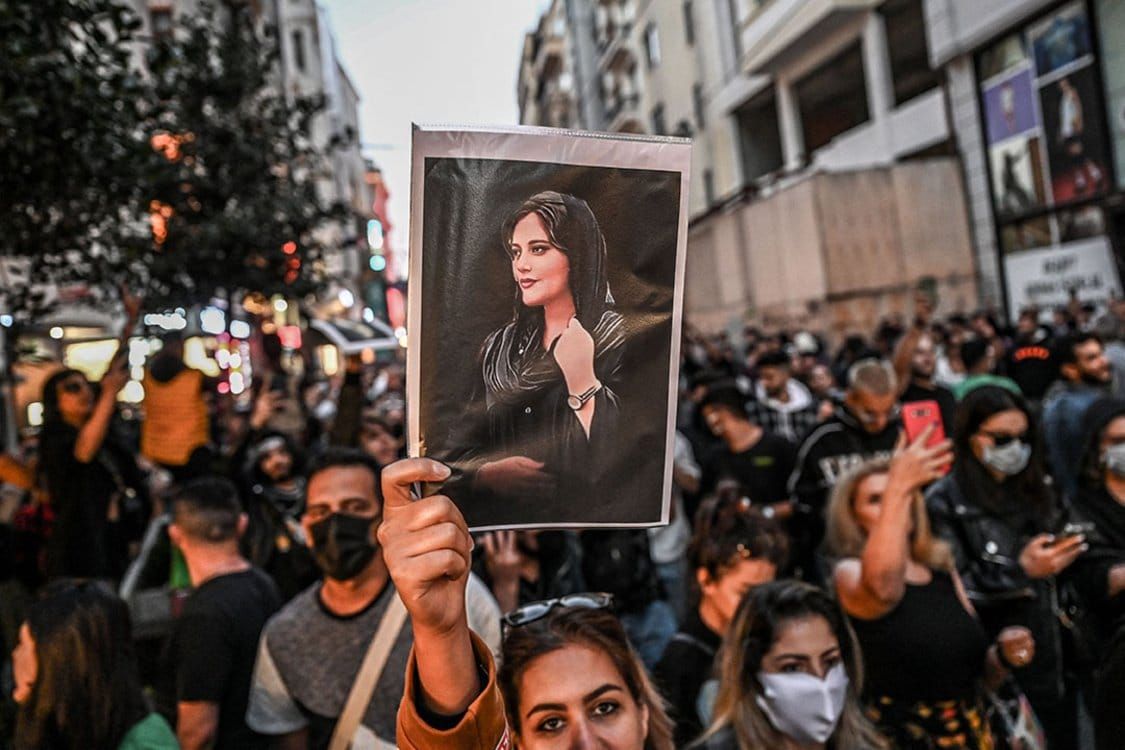
Regime change may be inevitable for Iran
The current regime in Iran have caused the death of innocent women, and civilians time and time again. Western allies aren't the only ones who desire change in management.
members only
china
A perspective on China vulnerability
Helpful overview of aspects of the Chinese nation and its vulnerabilities at home and abroad.








Member discussion