Sept. 23, 2024 – Quick Start authority contracts awarded: Under the Department of Defense’s “Quick Start” rapid acquisition authority, Space Systems Command awarded concept‑design contracts to Astranis, Axient, L3Harris and Sierra Space to begin developing a Resilient Global Positioning System of small satellites to augment the existing GPS constellation (Space Force awards four ‘Quick Start’ Resilient GPS …).
March 2025 – Funding reprogrammed: A March 2025 continuing resolution allowed the U.S. Space Force to transfer $30 million from the Protected Tactical Satellite program to finance initial R‑GPS procurement (Space Force awards four ‘Quick Start’ Resilient GPS …).
July 15, 2025 – GPS Resiliency Report Act: Congress introduced the GPS Resiliency Report Act, directing the Secretary of Defense to assess risks to GPS and report on R‑GPS’s ability to achieve full resilience within ten years (S.2277 - GPS Resiliency Report Act).
Operational Vulnerabilities
Adversaries can jam radio‑frequency signals or spoof counterfeit signals, degrading or misleading GPS receivers and creating risks for military and civilian users.
Proposed Architecture
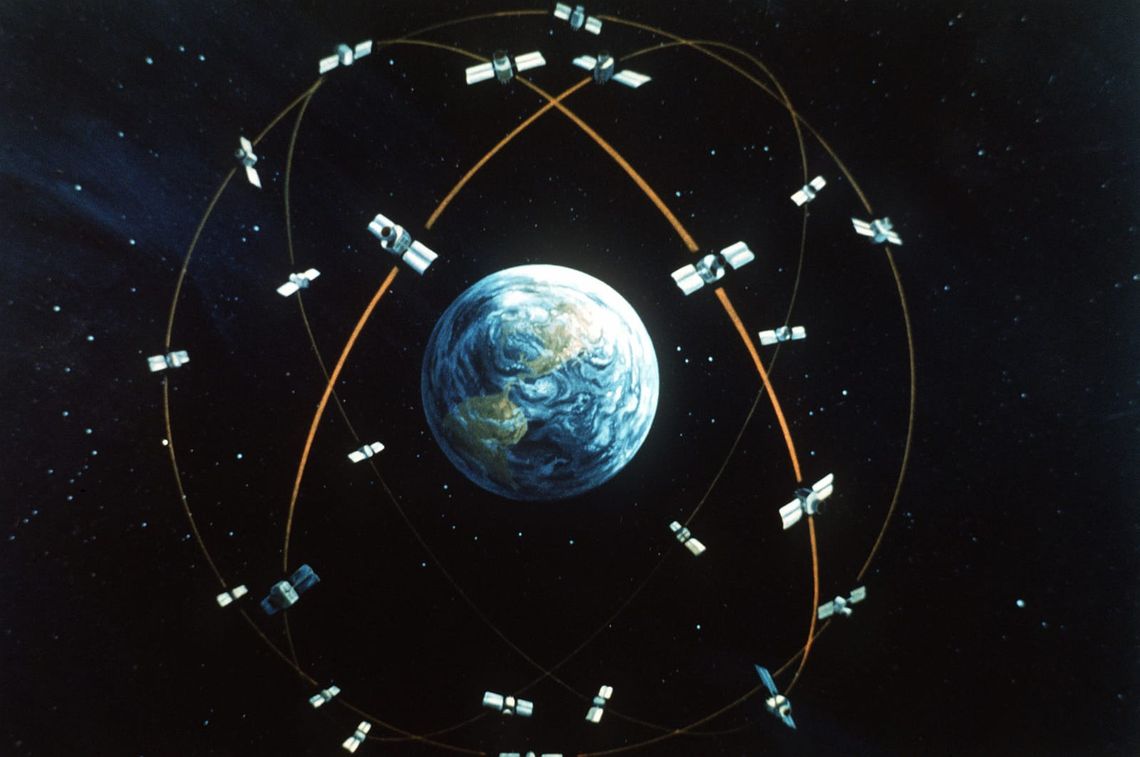
Early concept envisions a ~20‑satellite “proliferated fleet” to augment existing GPS constellations.
Design contracts have been awarded to L3Harris, Sierra Space, Astranis, and Axient; other firms such as Apex, K2, York, and major primes could bid.
Uncertainty remains over whether this architecture will meet resilience goals, especially under jamming/spoofing scenarios.
Governance & Congressional Oversight
Program planning is influenced by Force Design and the Space Warfighting Analysis Center (SWAC).
The House Appropriations Committee–Defense has expressed skepticism and cut FY 2025 funding; FY 2026 funding could be near zero pending review of the full PNT architecture.
Quantitative Milestones
Late 2025: Initial threat and capability assessment completion.
2035: Completion of space‑based resilience enhancements (e.g., hardened satellites).
2040: Development of terrestrial GPS redundancy system to provide alternate PNT signals.
Beyond 2040: Integration of space and ground systems for full resilient PNT service.
Predictive Commentary
There is uncertainty about whether the ~20‑satellite fleet can truly deliver resilience against jamming and spoofing.
Congress is not moving quickly and industry remains in concept‑development mode; the program’s future hinges on the final defense appropriations bill and overall PNT architecture review.
Budget
Implementation demands significant R&D and procurement investment; budgetary and contractual hurdles are highlighted in the AI report.
Success depends on appropriations.
What's next
Industry remains at the concept‑development stage.
Congressional decisions in the final defense appropriations bill will determine the program’s pace and scope.
don't smear
Member discussion
Similar topics
essays
Denied by Design
Is the Pentagon planning to lose? A Strategic Appraisal of PLA Counter-Space Doctrine and Implications for U.S. Tactical Operations
Privateer Space
members only
Privateer Space
members only
EDITORS PICKS
Why SpaceX isn't leaning into "deep orbit"
SpaceX's potential rationale for focusing on LEO and avoiding GEO and HEO assets. SpaceX has a successful LEO strategy that captures both commercial broadband and defense markets through Starshield






Member discussion